
Design
Begin with the life you imagine.
You do not need a finished plan before speaking to an architect. The first conversation can begin with a site, an existing house or a few questions. Its purpose is to turn intentions into a starting point for design.
Editorial · Zorlescu Architecture ·
Share the setting and the information you have.
The location, photographs and available documents help establish the context. Access, neighbours, orientation and vegetation can influence a proposal from the outset. Identifying missing information is more useful than replacing it with an assumption.
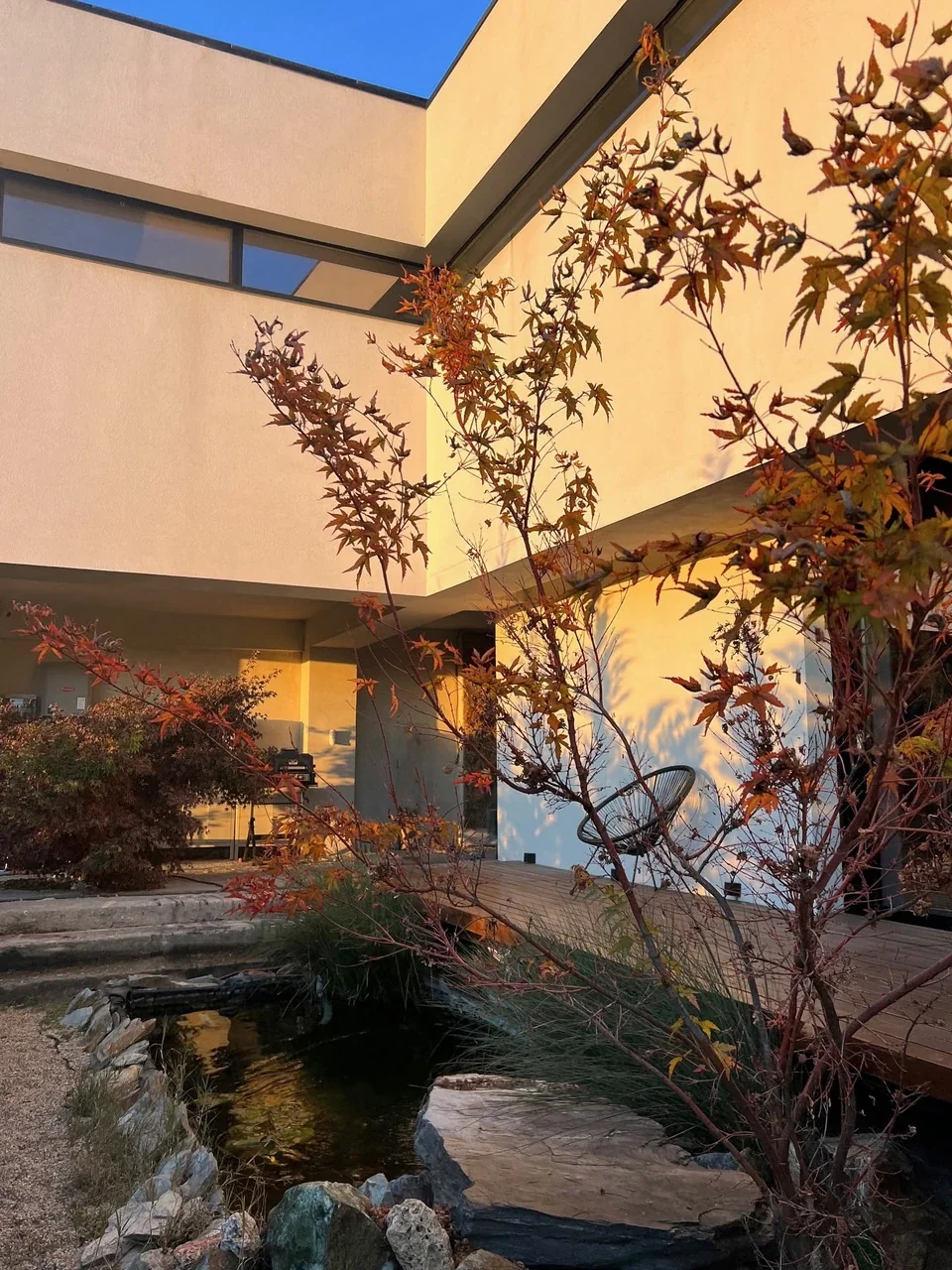
A photograph can convey the character of a place, but it does not replace the documents and checks a project needs. Appropriate stages and investigations depend on the particular circumstances.
Describe an ordinary day.
Where do you work? How do you arrive with the groceries? When do you need quiet, and when do you want company? The relationships between activities can explain a brief more clearly than a list of rooms.
Describe what you would change about your current home. A kitchen connected to the garden, a separate workspace or a more natural route through the house can become clear design priorities.
Distinguish priorities from open preferences.
Reference images help when you can explain what attracts you: the light, material, proportions or connection to the outdoors. Different buildings may illustrate the same underlying wish.
Discuss the available budget, preferred timetable and unresolved decisions. These are working inputs that help compare options; they do not guarantee that every proposal will suit the same conditions.
Agree on a clear next step.
By the end of the conversation, it should be clear which information needs to be completed and what comes next. Our Expertise page explains the design stages, while the portfolio provides starting points for discussing space. For a new project, you can reach us through the Contact page.